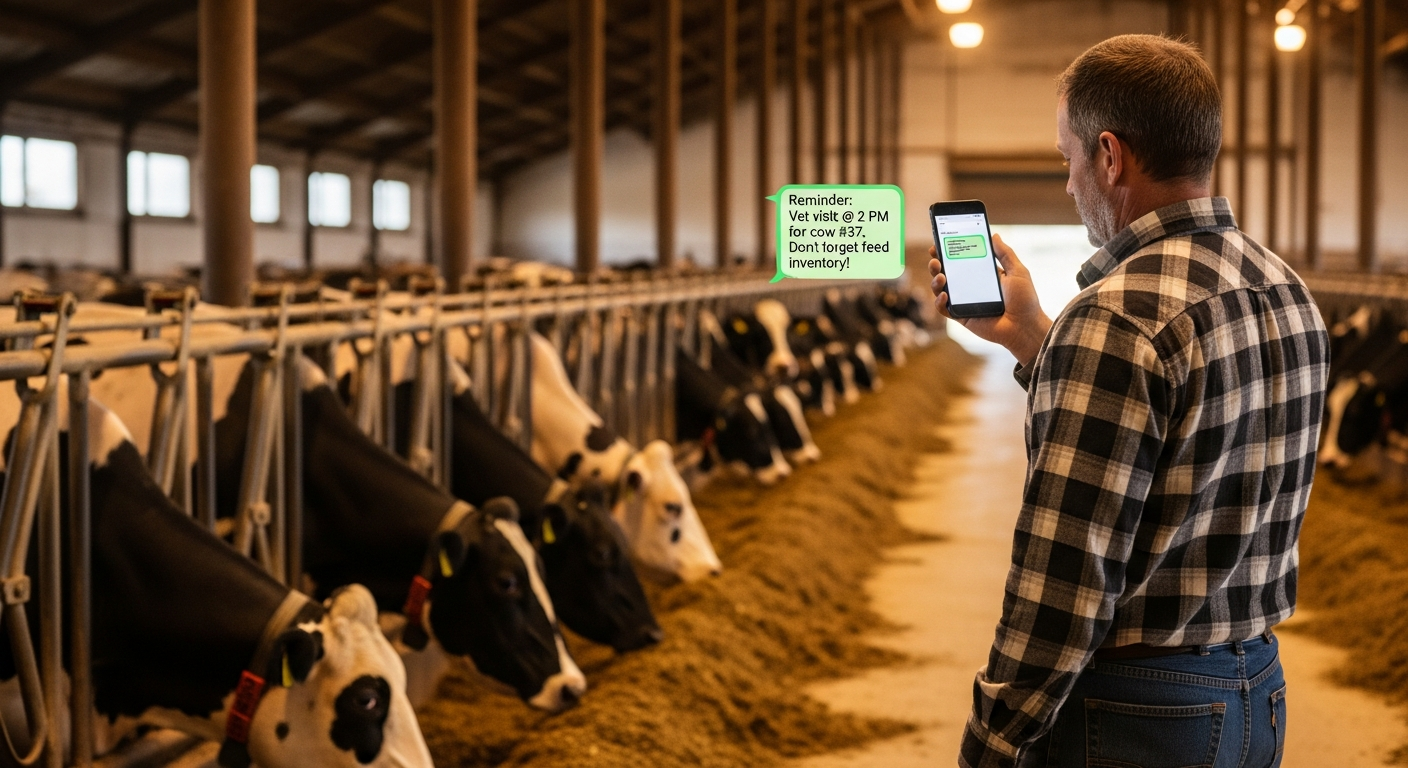
Managing Farm Customers Without Spreadsheets
Every small farm starts with a spreadsheet. One tab for customers, another for this week's pickups, a third for who paid and who hasn't. It works reasonably well until you hit about 15 customers and someone changes their pickup day. Then the ripple effects begin — the schedule tab is wrong, the payment tab refers to the old quantity, and somewhere in the confusion a customer shows up expecting a gallon you didn't set aside.
What You Actually Need to Track
The core information for a direct-sale farm operation is simpler than most software makes it look. For each customer you need: their contact info, their weekly order (quantity and pickup day), any special arrangements (vacation holds, alternate quantities), payment status for the current period, and a note or two about preferences or history.
The problem with spreadsheets isn't that they can't hold this information — they can. It's that they don't surface the right information at the right time. On a Tuesday morning when you're loading the truck, you don't want to scan rows; you want a list of today's pickups sorted by time, with quantities and any notes flagged.
The Bottleneck Is Usually Communication, Not Data
Most small farm operators spend more time on logistics communication than on the records themselves. Texting each customer individually to confirm a pickup. Copying a Venmo username from a note to send a payment request. Remembering which customers said they'd be away next week. These micro-tasks add up to two or three hours every week that disappears from actual farm work.
The highest-leverage thing to automate is the reminder. A single tap that sends a personalized text to every customer scheduled for tomorrow — "Hi Sarah, reminder that your 1 gallon pickup is tomorrow at 9am at the barn" — saves significant time and dramatically cuts no-shows. The second-highest leverage point is payment tracking that lives alongside the pickup record, not in a separate document.
When the Transition Makes Sense
If you have fewer than 10 customers, a well-organized spreadsheet is genuinely fine. The overhead of adopting a new tool probably isn't worth it at that scale. The transition point for most farms is somewhere between 12 and 20 customers — when the cognitive load of tracking everyone's individual situation starts consuming real mental energy, and when a single scheduling error has visible consequences.
Look for tools built for direct-farm operations specifically, not generic CRM or small-business software. The concepts in farm pickup scheduling — recurring weekly orders, vacation holds, per-day headcounts, payment links tied to individual pickups — don't map naturally onto software built for retail or service businesses. The closer the tool matches how you already think about your operation, the faster the adoption curve.
For a side-by-side of spreadsheet vs app for pickup day, SMS, payments, and holds, see farm pickup app vs spreadsheet.
Try My Farm free for 30 days
Track pickups, send SMS reminders from your farm number, and collect payments — built for direct-sale farms with 10–60 customers.
From $20/mo after trial · Cancel anytime